
Delivering Region-Specific Product Pages Through a Single CMS Architecture
- Regional Expectations Can Be Fulfilled Without Fragmentation
- Content Models Help With Localizing at Scale
- Centralized Control from One Architecture But Local Changes Allowed
- Regional Front Ends Get Dynamic API Delivery
- Product Pages Relevant to Market Intent
- Seamless Localization of Multilingual Content
- Maintaining Legal Compliance in All Markets
- Creating Branding Consistency Amidst Localized Content
- Gaining Insights Into Regional Success for Future Growth
- Regional Teams Can Own Their Content Decentralized Ownership
- Global Product Updates are Automated
- Content is Infrastructure That Future-Proofs as Brands Emerge into New Regions and Channels
- Conclusion: Scaling Global Product Pages with Precision
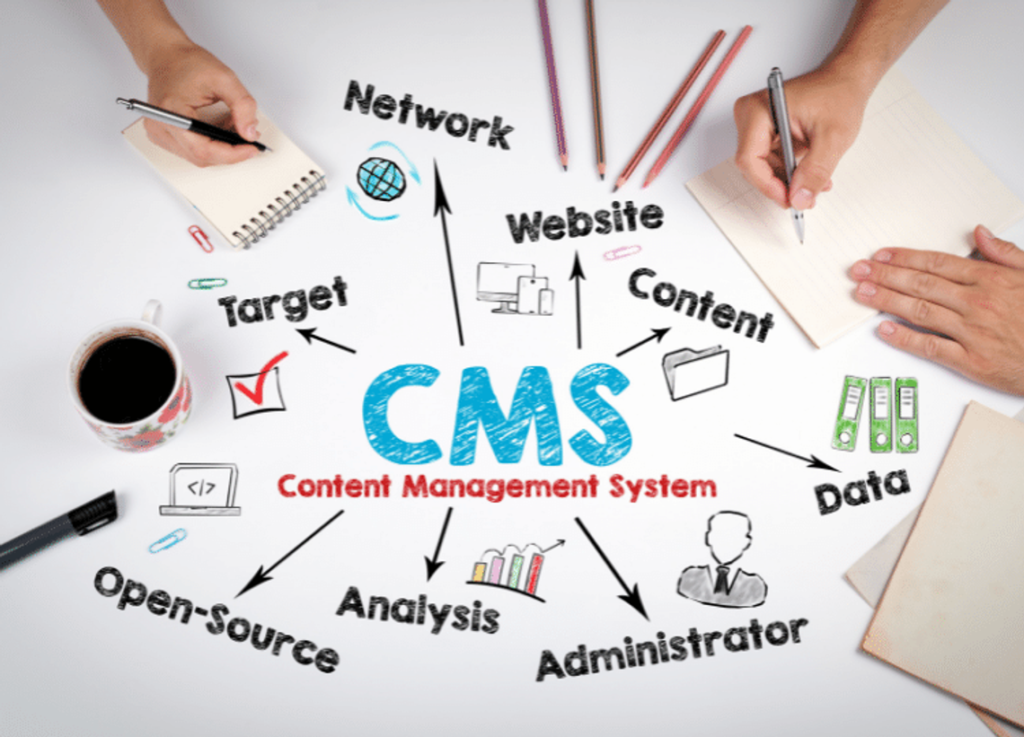
The larger brands go internationally, the more necessary it becomes to regionalize product experiences. Customers from different countries want alternate product tastes, regulatory requirements, currencies, and purchasing behaviors. It's overwhelming to have to parse all of this across multiple systems. A comprehensive CMS solution specifically a headless CMS provides the base solution required to create regionally based product pages from one hub. Companies can make adjustments more accessible through content structuring and localization systems that allow for flexible front-end delivery to regionalize all efforts at once without sacrificing global branding.
Regional Expectations Can Be Fulfilled Without Fragmentation
Consumers expect products to know their needs. Whether that means pricing in the proper currency or symbol, regionally specific specs and descriptions, and culturally appropriate images, attempting to fulfill these expectations through separate CMS instances only results in redundancies in efforts on messaging that doesn't fit and disjointed experiences. Discover the Storyblok platform to see how a unified architecture can deliver this level of personalization at scale. A single CMS architecture allows all product information and content to exist in one, unified system while administering from a centralized location where applicable fields are permitted for regionalized customization. Global marketing teams and product managers work better together and effectively create a universal experience.
Content Models Help With Localizing at Scale
A headless CMS means that various teams can create structured content models to detail what product information needs to go with what in large pieces of data. For instance, products have names, features, lists, descriptions, pricing, images, and CTAs. Each can become a field in and of itself where only the fields requiring translation for other languages or other cultures can be edited without needing to recreate the entire product page. Localization teams do not need to spin up entirely new versions of related items if only the pricing needs to change fields and attributes can link back to the master content for ease, consistency, and time savings.
Centralized Control from One Architecture But Local Changes Allowed
An all-in-one CMS architecture allows global enterprises to control features and functionalities (and products) that need to remain consistent while allowing local teams to modify what's necessary. With role-based permissions and content workflows, global managers can see what can remain the same across the board and which fields can be open for local changes. For example, a global legal disclaimer might want to be the same everywhere and be locked down; however, any CTA or promotional material could be informed by market-driven campaigns unknown to the global enterprise. This keeps everything compliant yet part of a more extensive directive while giving local teams the access they need to give power back to their audiences.
Regional Front Ends Get Dynamic API Delivery
A headless CMS is an API-first architecture, meaning content is delivered dynamically to any front end. This makes creating product pages for region-specific needs a simple task, since customer location, language or regional domain can determine what content is pulled when someone navigates to the page. Someone in France, Japan or Canada, for example, can have the front end pull and display that information in real time. There's no need to create different versions of the same product page and it can be guaranteed that the most relevant one displays every single time.
Product Pages Relevant to Market Intent
Regional differentiation occurs not only with language but products can vary from market to market as well. Pricing, availability, features and compliance information are all changes that may be necessary. Since a headless CMS allows single sourcing of content via tags and organization, a global brand with one CMS can have one product page but adjust elements based on region, segment or audience actions. For example, for German customers, the anti-humidity feature can be prioritized; for models not sold in a certain country, that information can be totally hidden. The more intent a customer feels is recognized during the digital experience, the more likely they will convert.
Seamless Localization of Multilingual Content
One of the most challenging aspects of a global content strategy is the need to maintain a complicated multilingual product page library. A single CMS architecture can simplify the approach with translation workflows built in natively for locale recognition and communication with translation management systems (TMS). This means content editors know at a glance where each language version stands whether it's in review, approved or pending edit and easily pushes edits to production environments. In addition, translations are connected to individual fields so that when something is changed in English, it changes in French and Spanish to ensure that every single market gets every single relevant update. This champions accuracy over speed but ultimately brand consistency across all regions.
Maintaining Legal Compliance in All Markets
Product marketing must also comply with local laws and regulations across industries. For example, heavily regulated industries like healthcare, finance or consumer electronics need clear communication regarding the marketing of products. A central CMS fosters legal compliance by offering mandated legal content blocks and approval workflows within the publishing process. For example, compliance can be assigned to regional reviewers, and required fields certifications, disclaimers or warnings can be made mandatory. In addition, compliance occurs as companies utilize version control and audit trails that allow companies to keep documentation that proves compliance risk mitigation and operational transparency.
Creating Branding Consistency Amidst Localized Content
While content may differ from region to region, branding should not. Headless CMS technology enables a company to build a design system enforced apart from content. This means that while product pages can be localized, the layout, fonts, colors and branding elements remain unchanged. Developers can code front-end components rendered automatically by the CMS to display any text pulled from it. This way, users see a uniform presentation across the board preserving brand equity and ensuring users feel their localized product page is legitimate.
Gaining Insights Into Regional Success for Future Growth
To continuously improve global content strategies, marketers must understand how product pages perform per region. A headless CMS can integrate with various analytics solutions to gain a global and localized view. For example, marketing teams can learn which regions have the highest engagement with particular features or conversion areas or drop-off points. With this understanding, teams can apply A/B testing, develop content and launch campaigns in other regions creating a feedback loop for continuous improvement.
Regional Teams Can Own Their Content Decentralized Ownership
A headless CMS doesn't empower ownership to a central hub; it empowers dispersed teams with content ownership. For example, regional marketers can adjust what products are offered, discounts, and messaging to their regions albeit within the bandwidth allowed by the larger global team. This decentralized ownership means that regional teams can be agile and work on their own without waiting for direction from HQ.
Global Product Updates are Automated
For a global brand needing to adjust its products raising prices, adding features, or discontinuing products it can be overwhelming combing through various iterations of what's offered across the region. The Headless CMS simplifies this requirement through the automated fields/characteristics being linked to the same product records. If a global brand raises the price of a product in one region, for example, the global team can set the auto-generate feature everywhere else it's used on regional sites. This helps avoid human error, redundant efforts, and outdated offerings.
Content is Infrastructure That Future-Proofs as Brands Emerge into New Regions and Channels
This urgent necessity grows as companies branch into new industries and subsequent products, launching in different global markets over time, utilizing voice search, mobile apps, smartwatches, devices in cars, and IoT connected devices. Each new initiative leverages new interfaces and applications with specific quirks, customer interaction opportunities, localization requirements, and compliance features.
Therefore, in this eclectic content world, a flexible, adaptable content approach is no longer an option; it must be done, and a headless CMS allows organizations to separate their content offerings from presentation to safeguard against reinvention down the road.
Modular content new product descriptions, prices, specs, and disclaimers created with aesthetic needs can always be captured once. Still, each intent can be linked via APIs to deliver such content to any front end, whether a new website, a mobile app, a mixed-reality solution, or a voice application. This decoupling effort enables the use of intelligent content to ensure the right message is always displayed in whatever form without needing to redesign or rewrite the wheel. Ultimately, these enterprises can provide the same customer experience across any device without concern for inconsistencies and ensure proper brand presentation and functionality.
Furthermore, a headless CMS enables organizations to localize their offerings and options. As companies go international, content localization is less complicated without compilation efforts; there is one source of truth. However, localized teams can work within the greater CMS distraction-free by adhering to localized requirements within content blocks attached to dimensional compliance while exposing universal regulations for brand integrity.
Therefore, time to market is expedited for campaigns and releases. Enterprises remain agile as fads change and they can always add channels and platforms without requiring an overpriced reconstruction of their content management systems. With a headless CMS, organizations can scale effectively, transform fearlessly, create innovations from project day one and still have consistent customer expectations no matter how many new options emerge. Ultimately, a headless CMS prepares an enterprise for future success by making any content created to date an intelligent asset that goes with the brand wherever it goes.
Conclusion: Scaling Global Product Pages with Precision
The answer to providing product pages in various regions does not translate to maintaining multiple backend systems, or manually entering all product information across cross-functional teams and channels. This creates redundancy, dissociation and additional operational burden and for large enterprises with complicated product lines and product solutions across global markets, we know this can be a disaster. The only way to streamline, without sacrificing speed or quality is through a single backend CMS infrastructure in this case, a headless CMS.
A headless CMS was created so that enterprises could keep all content capabilities in one place yet unhinge content from its delivery layer to push to multiple APIs. This means that marketing teams and content teams can create, maintain and manage all product content and distribution in one place but render regionally relevant versions to applicable websites, apps and more, seamlessly. Content fields can be configured for replication meaning businesses can create entry fields for product name, description, graphic and price that can easily be tagged to various locales without the need to duplicate entire pages.
Localization, personalization and compliance are easily scaled within one CMS solution. For example, enterprises can create language variations associatively with one master entry, and change where necessary for region-specific language, messaging, and visual support. For personalization, enterprises may decide to geo-allow access to certain products meaning products can be shown relevant to IP address or service offerings to trigger campaign-related activity; every visitor to the same URL could see a different version of the product page. For compliance, built-in workflows will ensure that region-specific disclaimers, terms, and agreements are associated (and vetted) prior to publishing.
This level of system enables large-scale enterprises to do what's best for their businesses but also gives regional teams the flexibility to make adjustments for their unique market needs based on customer feedback and anticipated expectations. It builds collaboration between the corporate office and sub-offices, simplifies content publish workflows and allows for product updates even price changes and fixes to happen simultaneously across multiple regions in no time.
In an environment where digital presence must be timely, trustworthy and relevant, a headless CMS solution fosters the infrastructural support for scalable potential. It gives brands the choice to render product content that feels personal and localized yet under the guiding hand of operational oversight. For those looking to expand across multiple markets, a headless CMS is not only the solution from a technology-driven standpoint but a transformative approach to agile content operations that's customer-of-the-future focused.
Leave a Reply