
How AI Tailors Landing Pages for Different Buyer Personas in Real-Time
- AI's Capability to Assess Buyer's Personas
- Real-time Optimization Based on Visitor Persona
- Enhanced Personalization through Predictive Analytics
- Emotional Intelligence on Persona-Based Landing Pages
- Content Generation Based on Buyer Personas in Real-Time for Highest Relevance
- Visual Customization for Buyer Personas Engagement
- Behavioral Data is Seamlessly Integrated
- The Ethics of Personalization are Better with Transparency
- How to Measure Success of Real-Time Personalization
- Training Marketing Teams for Persona-Based AI
- Avoiding Common Pitfalls in AI Persona Personalization
- Future Trends in AI Persona Personalization
As digital marketing becomes increasingly crowded, companies turn to cutting-edge AI solutions for an even more tailored experience online. One of the most significant developments is AI's ability to facilitate real-time, dynamic landing page personalization among different buyer personas. As a cutting-edge form of engagement, this gives a brand the ultimate chance to engage a visitor almost immediately, exponentially increasing conversion potential with persona-specific content on the screen from the very first interaction.
AI's Capability to Assess Buyer's Personas
Artificial intelligence has the capability to process and analyze so much data that it can assess buyer personas on a micro and macro scale. Through aggregate data surrounding purchases, site visits, searches, browsing patterns, demographics, and even social activities, AI can process algorithms that deduce certain characteristics, preferences, and intentions over time for certain populations. With automated landing pages using AI, these insights can be instantly applied to dynamically tailor content and layout to each persona, allowing landing page presentations to cater to micro-focused audiences that make excellent first impressions with a greater likelihood of conversion.
Real-time Optimization Based on Visitor Persona
One of the most powerful aspects of artificial intelligence is real-time analytics that makes content changes on landing pages the second someone arrives. For example, when someone lands on a page, artificial intelligence can determine who that person is very quickly based on previous engagement with the website, geographic location, past searching habits, or even the referral link through which they came. Changing titles, images, offerings, and wording based on who this individual seemingly is going to be provides the highest level of relevance and satisfaction for the visitor, right out of the gate.
Enhanced Personalization through Predictive Analytics
With AI-driven predictive analytics, landing pages can anticipate user needs before they've fully interacted. By interpreting previous patterns and real-time data influx, AI can accurately surmise which content, product, or communication best aligns with which persona. Armed with this information, landing pages can shift messaging, products and content before the user even knows what's happening but it gives them exactly what they want and the likelihood of engaging and converting is much higher.
Emotional Intelligence on Persona-Based Landing Pages
Landing pages equipped with emotional intelligence can respond to the more subtle emotional shifts of different buyer personas and do so successfully with AI. If a prospective customer indicates uncertainty, excitement, urgency, AI picks up on the signals and adjusts the tone, language and visuals accordingly in real-time to cater to the buyer's personal emotional alignment. This type of emotional alignment fosters a stronger connection and level of comfort and trust with the visitor. Therefore, this type of emotional segmentation significantly raises engagement and conversion rates.
Content Generation Based on Buyer Personas in Real-Time for Highest Relevance
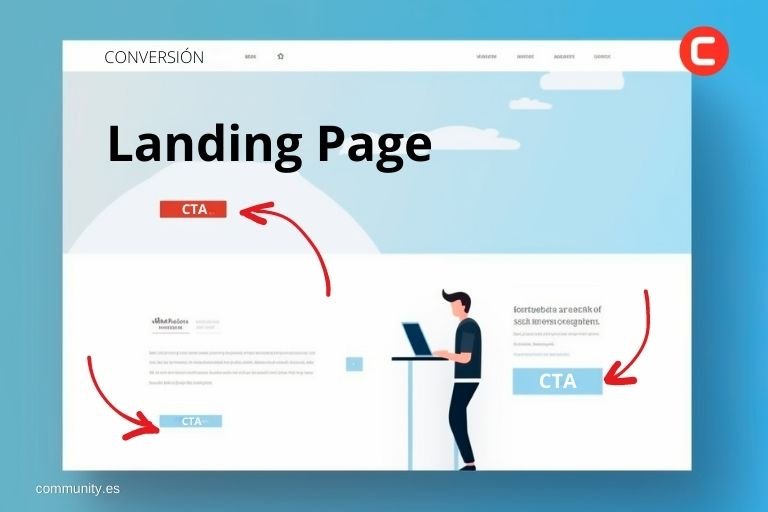
One of the most powerful aspects of AI is its ability to generate content in real-time for various buyer personas. From unique headlines to relevant product descriptions to effective calls-to-action, within seconds, AI can generate something that resonates with each one of its personal efforts. Therefore, everyone on a modified landing page will get what they need from the appropriate headlines to lengthier descriptions and more; all the aspects that facilitate meaningful conversion efforts. This type of content generation empowers every persona to have content generated specifically for them which increases relevance, engagement and possibilities for conversion.
Visual Customization for Buyer Personas Engagement
Moreover, AI customizes visual elements on landing pages for buyer personas successfully. By having access to visuals and knowing how various audiences react to them, AI learns which images, colors, designs, layouts, and graphic elements appeal most to specific audience segments and utilizes them in the moment. Visually customized landing pages created this way are more aesthetically pleasing and favored by the eyes and sensibilities of those who see them enhancing engagement, experience and probability of successful conversion.
Behavioral Data is Seamlessly Integrated
Whereas personalized landing pages of yore that were not AI-enhanced relied upon situational behavioral data, AI-driven personalized landing pages have access to real-time information. Where the persona creation for personalization continues due to page attention (scrolling, clicking, time spent on the page, etc.) and across sections (different calls-to-action), AI can adjust in real-time what's being shown and how it's being rendered to reflect changes based on visitor preference. Thus, with this integration of seamless behavioral data that's rendered responsive just like a conversation, landing pages can be even more malleable and more ideally suited to visitor needs for as long as they stay engaged.
The Ethics of Personalization are Better with Transparency
As an AI-created landing page personalized content for visitors, brands must still operate under ethical best-practice fixes to render everything transparent with AI acquisition, audience privacy, and the mechanics of how AI-informed personalization occurred. For example, it's essential to make it known that AI helped create certain aspects of the content. Ideally, brands should require consent from visitors before any engagement on the page. When consumers know that a brand is up front about AI involvement, they are less likely to fear it and more likely to appreciate the engagement knowing their safety comes first. The ethics of positive personalization make people feel secure and more willing to engage over time for conversion credibility and reliability will stretch far.
How to Measure Success of Real-Time Personalization
Marketers must measure and evaluate AI engagement of landing pages relative to specific personas to enhance performance going forward. For instance, depending on persona-based personalization, increased click-through rates and conversion rates, time spent on page, decreased bounce rates, and improved customer satisfaction scores indicate successful efforts. With a data driven mindset, adjustments can be made for survival to keep landing pages that will only become more engaged, satisfied and ready to convert.
Training Marketing Teams for Persona-Based AI
To truly exploit real-time AI personalization, firms must educate their marketing teams on AI tools and buyer persona approaches. Marketing teams should understand how AI identifies personas, what the analytical results mean, and how best to partner with AI to enhance page effectiveness. When marketers are in the know, they can more intentionally incrementally adjust AI-generated personalization in a way that maintains the authenticity of the content, driving engagement and potential for conversion at the same time.
Avoiding Common Pitfalls in AI Persona Personalization
Yet companies must also be able to predict and proactively avoid obstacles that could undermine the effectiveness of AI-driven personalization. These three components include an over-reliance on simplistic persona segmentation, avoidance of data collection, and avoidance of the human element in automation. First, an over-reliance on simplistic persona segmentation can lead to surface-level or ineffective personalization. If a targeting segment is too simplistic or broad, for example, landing pages will have little focus or meaning, making them unappealing and ineffective in conversion. Instead, relying on the detailed attractions and motivations of consumers is the way to ensure that developed audiences mean something to them on every level.
Second, AI-driven personalization hinges on data; therefore, companies must avoid untrustworthy sources of data collection and instead ensure that their data collections are accurate, expansive, and representative of appropriate user transactions and interests. When data is inaccurate or incomplete, personalization is improperly executed and rendered useless. For example, AI-driven landing pages created by such data will appear even more disjointed and less personal to viewers, indicating higher bounce rates and reduced conversions.
In addition, another AI blunder involves less human interaction. The fact that AI can basically do everything is offset by the fact that having people there to make final cut decisions, focusing on brand voice consistency and adding emotionality to pieces keeps things authentic. Therefore, having project managers come in after AI has created text options and mood boards can ensure the final product is in line with strategy objectives, ethical concerns and ultimately brand identity as a unique voice and not a robotic one. Thus, avoiding this blunder makes landing pages hit home more as humanized experiences for the reader. Thus, by avoiding such potential disasters AI blunders companies' AI generated landing pages can be more successful and on-brand. Extensive persona modeling ensures that the AI has all the information from behavioral information and demographic factors to psychographic elements to piecemeal all personality details to best represent and communicate the needs and desires of an audience. AI blunder surrounding false predictions relates to no data processing. Companies should make sure that any predictive factors relate to real data.
This type of authenticity is sustained by continual human intervention because where marketers can apply analogous creative and emotional nuances and business strategy alignment to what AI generates and experiences, AI landing pages will forever give expected experiences over time but with the necessary authenticity and intentionality for each visitor persona.
Thus, by knowing these mistakes and purposefully not doing them in the first place, companies are guaranteed to have persuasive, engaging landing pages on a frequent basis for all kinds of consumers. As this is a purposeful, nuanced endeavor from Day One, it's not about just having a personalized experience as a landing page will be so much more than that for consumer satisfaction and gratitude, extending to business success.
Future Trends in AI Persona Personalization
Future AI trends strongly predict where persona-based landing pages are going that such personalization and interaction will not only be possible, but transformed. For example, voice interaction will go a level deeper as people will be able to talk to landing pages as if they are friends or at least people talking back through AI technology. This provides an extremely sophisticated experience that eliminates friction even more, allowing people to pose questions and receive feedback by talking instead of tapping, typing or scrolling.
Furthermore, more sophisticated augmented reality (AR) interactions will personalize the experience even more beyond expectation. For example, being able to see a product in your home or a service virtually placed on your person or property one day will be possible through a landing page exploration. Such realistic interactions create deeper affective associations and probability for purchase as the interaction exceeds expectations beyond what a mere image could achieve.
Another groundbreaking innovation involves hyper-personal hyper-emotional analytics on an AI-assisted landing page. Should a customer be about to leave an indicator of indifference, AI will sense the slight movement change and alter page visuals, content, and copy to match what's believed to be the nuanced feelings of many personas in real time. The ultimate collaboration from a more accurate understanding of the response and sensitivity rendered to now visitors will create understanding, trust, and compassion that increases conversion rates exponentially through authentic empathetic exchanges.
Those companies that will enjoy a competitive advantage are those that stay on top and integrate such capabilities into their persona-driven landing pages effectively, instead of admiring new technologies for what they can do. They will have a competitive advantage for finding their niche in an already established world: blending its operation with ongoing improvements for the most significant achievements in conversion rates, personalization, and engagement efforts. Such organizations can only be flexible enough to use such advancements by being one step ahead to combat other companies doing the same, client demand, and industry growth.
Ultimately, those companies that will keep utilizing the new AI capabilities to the fullest will be creating state-of-the-art, persona-based landing pages and keeping users engaged and driving them to beat the competition. Additionally, by continuously working with innovative strategies and a customized approach over time with a thorough understanding of AI, they'll surpass visitor expectations and their efforts for customer retention, as always, will create a stable long-term operation in a constantly evolving digital market.
Leave a Reply